Multimodal Travel in India: How Combining Trains and Luxury Buses Beats Sold-Out Tickets
Escape the Indian Railways waitlist trap. Learn how combining express trains with private AC sleeper buses saves hours, cuts travel costs, and guarantees confirmed seats.
The Single-Mode Trap: Why Indian Travellers Get Stranded
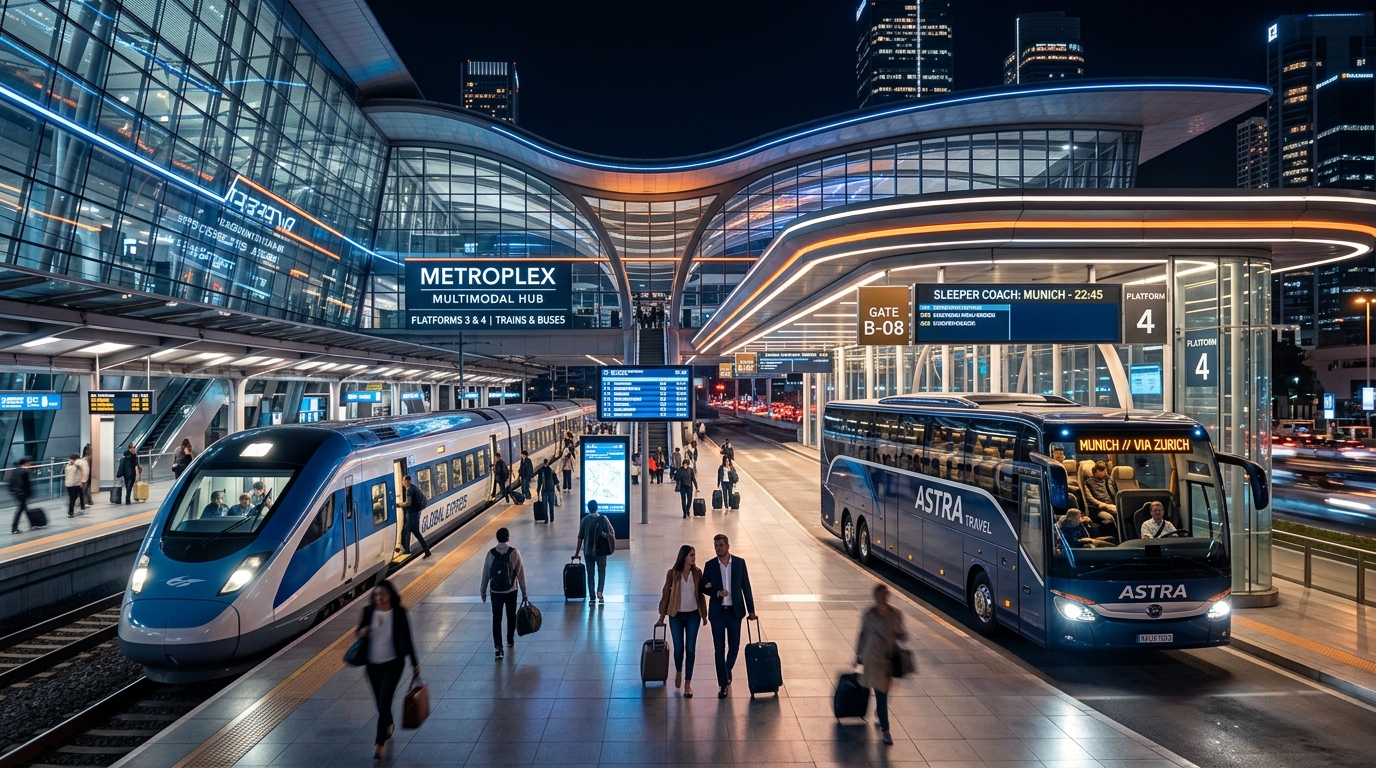
For over 70 years, planning an intercity trip across India has followed a binary ritual: you either book an Indian Railways train ticket, or you purchase an airline flight. When train tickets show 'Regret' and flight tickets skyrocket to ₹12,000 for a one-hour hopper, millions of travellers assume their trip is impossible.
Meanwhile, India's highway infrastructure has undergone a massive transformation. World-class access-controlled expressways—like the Samruddhi Mahamarg, Bengaluru-Mysuru Expressway, Delhi-Meerut Expressway, and Purvanchal Expressway—combined with multi-axle Volvo 9600 and Scania luxury sleeper coaches have created a high-speed transit network that rivals rail travel in speed and comfort.
The Power of Multimodal: How the Math Works in Your Favor
Multimodal travel simply means refusing to be constrained by a single mode of transportation. By taking a high-speed train for the long-distance trunk corridor and switching to a luxury sleeper bus for the secondary connection, you gain three massive advantages:
- 1. 100% Confirmation Certainty: While train routes sell out months ahead, private and state AC bus operators adjust fleet capacity dynamically, meaning confirmed berths are almost always obtainable.
- 2. Elimination of Circuitous Delays: Railway tracks often curve through hundreds of extra kilometres to serve old colonial junctions. Modern expressways cut straight through mountain passes and direct corridors.
- 3. Better Departure & Arrival Timings: Instead of arriving at an inconvenient 03:00 AM at an isolated railway station, bus connections allow you to schedule departures that fit your workday.
Pro tip: Safety & Connection Buffer: Always leave at least a 90 to 120 minute buffer between train arrival and bus boarding. Indian rail stations can experience signal delays, and major cities have peak-hour traffic between railway stations and highway boarding terminals.
Three Classic Multimodal Routes That Outperform Direct Options
Here are three iconic Indian travel corridors where combining trains and buses consistently beats direct booking:
- Bengaluru to Goa: Direct trains are notoriously slow and perpetually waitlisted. Solution: Take the Shatabdi or Vande Bharat from Bengaluru to Hubballi or Belagavi, followed by a comfortable 3-hour AC sleeper coach down through the Western Ghats to Panaji.
- Delhi to Manali or Dharamshala: Direct mountain trains do not exist. Solution: Take the high-speed Vande Bharat from New Delhi to Chandigarh or Una Himachal, then board an executive Volvo bus straight up the Himalayas.
- Mumbai to Kolhapur or Belgaum: Combine an express rail run from Mumbai to Pune (3.5 hours) with an hourly multi-axle sleeper bus along the Pune-Bengaluru highway.
Luggage, Comfort, and What to Expect on Modern Buses
If you haven't taken an interstate bus in India in the last five years, modern luxury fleets will surprise you. Operators like Zingbus, IntrCity SmartBus, VRL, SRS, and KSRTC Flybus feature air-conditioned individual sleeper cabins, reading lamps, charging sockets, live GPS tracking, and scheduled hygiene rest stops.
Unlike airlines that charge steep excess baggage fees, most interstate bus operators comfortably accommodate 20–25 kg of luggage in dedicated under-chassis cargo holds.
How Wayvia Makes Multimodal Booking Effortless
In the past, planning a multimodal itinerary required opening four different apps, calculating manual station transfers, and stressing over transit delays.
Wayvia unifies trains, buses, and flights into a single seamless journey planner. It automatically pairs connecting schedules, verifies minimum layover buffers, and shows you total journey time and cost side-by-side.
Search Multimodal Journeys on WayviaFrequently Asked Questions
Verified answers to the most common questions about this topic.