The Ultimate Guide to IRCTC Split Ticketing: How to Find Hidden Seats on Sold-Out Trains (2026)
Direct train showing Regret or Waitlist 150+? Master IRCTC split ticketing and intermediate station booking to legally unlock confirmed berths on Indian Railways.
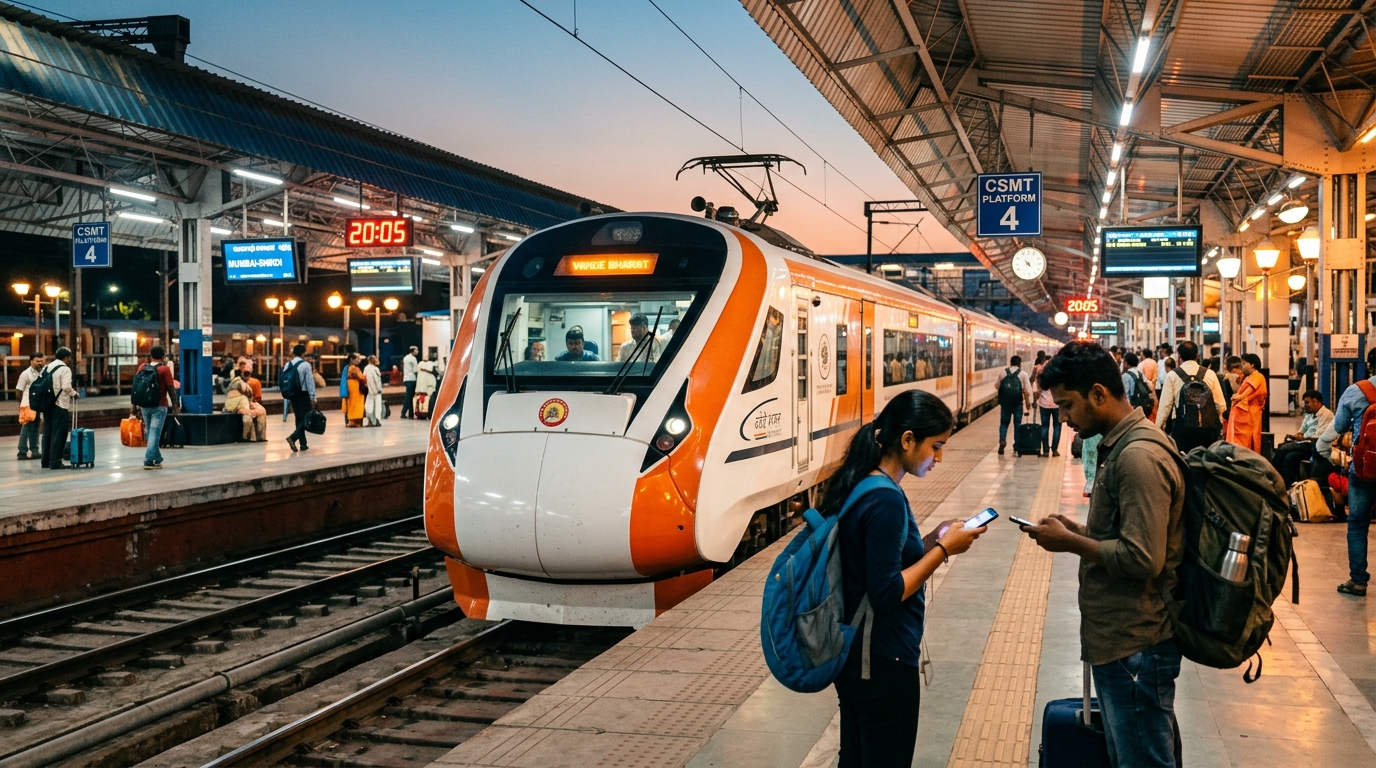
Understanding IRCTC's Hidden Quota Architecture
If you have ever tried booking a train ticket in India during Diwali, Chhath Puja, or the summer vacation rush, you know the dreaded feeling of seeing 'REGRET' or 'WL 180' within five minutes of booking opening. But here is the secret that veteran rail travellers and travel agents have relied on for decades: Indian Railways does not treat a train journey as a single bucket of seats. Instead, the Central Railway Information Systems (CRIS) engine carves every long-distance train into dozens of overlapping station quotas.
When you search for a ticket from New Delhi to Mumbai Central on IRCTC, you are competing exclusively within the General Quota (GN) allocated between the origin and terminal stations. If that quota of 300 berths is exhausted, IRCTC declares the train sold out. Meanwhile, the quota between New Delhi and Kota Junction, or between Kota and Vadodara, might have 45 seats sitting completely vacant. Split ticketing is the strategic practice of purchasing multiple tickets across these intermediate points to secure guaranteed berths on the very same train or via a connecting express service.
The Three Types of Split Ticketing
Not all split tickets are created equal. Depending on your flexibility, budget, and route geometry, there are three distinct ways to execute a split ticket in India:
- Same-Train Split: Booking Leg 1 (Origin to Intermediate Junction) and Leg 2 (Intermediate Junction to Destination) on the exact same train number. You remain on the same physical train throughout the journey.
- Junction Transfer Split: Taking an express or Vande Bharat train to a major rail hub (such as Itarsi, Mughalsarai/Pt. Deen Dayal Upadhyaya, or Vijayawada), enjoying a 1-to-2 hour platform transfer, and boarding a second high-speed train to your final stop.
- Multimodal Hybrid Split: Taking an overnight express train to a regional highway corridor, followed by a luxury AC sleeper bus or local flight for the final leg.
Pro tip: Pro Tip: When booking a Same-Train Split, make sure to inform your coach's TTE (Travelling Ticket Examiner) right after boarding leg 1. Show both PNRs so the conductor does not mark your berth as 'No Show' at the intermediate station when the new leg begins!
The Telescopic Fare Factor: Is It More Expensive?
Indian Railways calculates passenger fares using a 'telescopic' rate structure—the farther you travel, the lower the per-kilometre rate becomes. When you break a 1,400 km journey into two 700 km segments, the base fare increases marginally (typically by 5% to 12%), plus a second reservation charge of ₹40 to ₹60 per passenger.
Consider this real-world trade-off: Would you rather pay an extra ₹150 to ₹250 for a confirmed 3rd AC berth on a comfortable journey, or gamble on a Waitlist 85 ticket that will almost certainly be dropped during chart preparation? For working professionals, families, and solo travellers, split ticketing is the most cost-effective insurance policy in Indian transit.
Top Indian Rail Junctions for Confirmed Transfers
Knowing where to split is the core art of railway hacking. Certain junction stations serve as massive nodal interchanges where regional quotas are replenished. Here are the top hubs where connecting tickets frequently have confirmed availability:
- Kota Junction (WCR): The ultimate transit node on the Western Railway corridor connecting Delhi to Mumbai and Gujarat.
- Pt. Deen Dayal Upadhyaya / Mughalsarai (ECR): The primary gateway between Northern and Eastern corridors, bridging Delhi, Varanasi, Patna, and Kolkata.
- Itarsi Junction (WCR): The grand central interchange of India, connecting North-South corridors (Delhi-Chennai/Bengaluru) with East-West traffic.
- Vijayawada & Warangal (SCR): Vital transfer points for passengers travelling between Hyderabad, Chennai, Vizag, and Bengaluru.
- Vadodara Junction (WR): High-volume turnaround station for Western corridor trains heading into Saurashtra and South Gujarat.
How Wayvia Automates the Entire Split Search
Manually checking every combination on IRCTC is agonizing: you have to test station pairs one by one, solve repeated captchas, and verify that layover timings leave sufficient safety buffers. That is why we built Wayvia.
Wayvia's proprietary multi-modal routing engine automatically computes optimal junction splits in fractions of a second. It cross-checks live berth availability across General Quotas, Tatkal quotas, and connecting bus schedules to hand you a ready-to-book itinerary with guaranteed confirmation.
Find Confirmed Split Routes on Wayvia NowFrequently Asked Questions
Verified answers to the most common questions about this topic.